MEET OUR 2025-26 LANGUAGE ASSISTANTS!
DEPARTMENTS
- Advanced English (48)
- Arts (17)
- Biology (27)
- English (15)
- Physical Education (4)
- Social Sciences (17)
- Technology (10)
martes, 16 de diciembre de 2025
martes, 9 de diciembre de 2025
GLOBAL SCHOLARS
Some of our 2nd ESO students in the bilingual groups are taking part in Global Scholars, an international program that connects young people around the world to share ideas and create projects related to the UN 2030 Agenda.
This year’s theme is “Food and Our Cities.”
We’re excited to share a beautiful digital recipe book featuring healthy Spanish dishes created by students in classes 2A and 2D.
Take a look at the link — we’re sure you’ll be impressed!
https://www.storyjumper.com/book/read/186423211/6937d4b401fd0
viernes, 6 de junio de 2025
2º ESO's Final Global Scholars Project
Raising Awareness on Climate Change at Calatalifa School
Throughout this school year, our section 2nd ESO students have worked hard at the Global Scholars program. They've learned about sustainability and overconsumption, connected with peers around the world, and created different projects to demonstrate their learning.
- their informative posters (that have been put up around the school and that have QR codes leading to the website,
- a video and photos of their talks given to both older and younger students,
- the presentation they used in their talks,
- and their sustainability photojournals that offer suggestions on how to be more sustainable.
lunes, 7 de abril de 2025
Art is everywhere! Exploring art through design
The challenge consisted of creating informative posters about different artistic periods and plastic techniques. To do so, the students organised themselves into teams and chose an artistic movement (such as Renaissance, Baroque, Impressionism or Cubism) or a specific technique (watercolour, oil painting, collage, among others). From this choice, they began a research phase in which they gathered information on the most representative artists, the visual characteristics of each style and the tools used in each technique.
Once the research phase ended, it was time for creativity. The students designed their posters by applying principles of visual composition, typography and colour combination to achieve an attractive and harmonious result. To do so, they made preliminary sketches and used both manual and digital tools, reinforcing their graphic design skills.
The result was a gallery of posters full of colour, information and creativity, which were displayed in the school corridors for the whole school community to enjoy and learn from.
We look forward to seeing the next projects of these young artists and designers!
jueves, 13 de marzo de 2025
The Strength of Paper
The Strength of Paper: Innovation in Structure Construction at Our Institute
In the realm of technical education and creativity, we often face challenges where the key isn't just the strength of materials, but also the ability to think innovatively and find out-of-the-box solutions. A clear example of this was the activity carried out at our institute, where the capacity of an apparently fragile material like recycled paper was tested to create structures strong enough to support a significant load, such as the weight of a person.
Objective and Challenge:
The challenge presented to the students was to design and build a structure that was not only functional but also resistant. The uniqueness of this project lay in the use of recycled materials, specifically paper from the daily use of the institute and was no longer necessary. Through this exercise, participants explored concepts of structural design, material strength, and sustainability, demonstrating that creativity and engineering don't always require expensive or hard-to-find materials.
The Construction Process:
The key to this activity was transforming recycled paper into a form strong enough to withstand the expected load. Starting with regular sheets of paper, the students transformed the material into sturdy bars by carefully rolling the sheets to create a solid and resistant product. This process was carried out using basic materials like hot glue, scissors, a cutter, and toothpicks—simple tools that were enough to shape the structures.
Each sheet of paper was carefully rolled, beginning from the corners, to form a rigid bar that, when combined with others, became an essential component of the final structure. This method of manipulating and transforming paper allowed a material that is normally light and flexible to gain the strength necessary to support the load.
Materials Used:
Recycled paper (discarded paper, newspapers, magazines, etc.): The base material for the project, accessible, eco-friendly, and surprisingly versatile.
Hot glue: Used to bond the paper bars together and give them greater firmness.
Scissors and cutter: Basic tools for cutting and shaping the paper.
Toothpicks: A creative resource that helped reinforce connection points and improve the stability of the structures.
Solution Adopted:
The design of the structures was the result of a combination of testing and adjustments. The students experimented with different shapes and configurations, from triangular models to bridge-like designs, to maximize the stability and strength of their constructions.
Each model was tested with load trials, and while not all structures were able to hold the weight of a person immediately, the iterative process and constant improvements were key to finding the most effective solution.
The most successful structure was one that used a series of columns and beams arranged in a triangular reinforcement network— a common technique in structural engineering due to its efficiency in evenly distributing weight. Moreover, the construction allowed students to grasp fundamental concepts of physics, such as force distribution, torsion, and compression.
Final Reflection:
Through this activity, students not only learned about structural design, but also gained awareness of the importance of recycling and responsible material use. By using recycled paper, the activity promoted sustainable thinking and demonstrated how an everyday material can acquire new functions and applications with creativity and ingenuity.
This exercise made it clear that engineering doesn't always require complex or expensive materials. With simple materials like recycled paper, and a good dose of imagination, it's possible to create surprising and effective solutions. This activity not only strengthened students' technical knowledge but also fostered innovation, collaboration, and environmental awareness within the academic setting. Without a doubt, it was an excellent example of how simplicity can be incredibly effective when paired with the right creativity.
martes, 11 de marzo de 2025
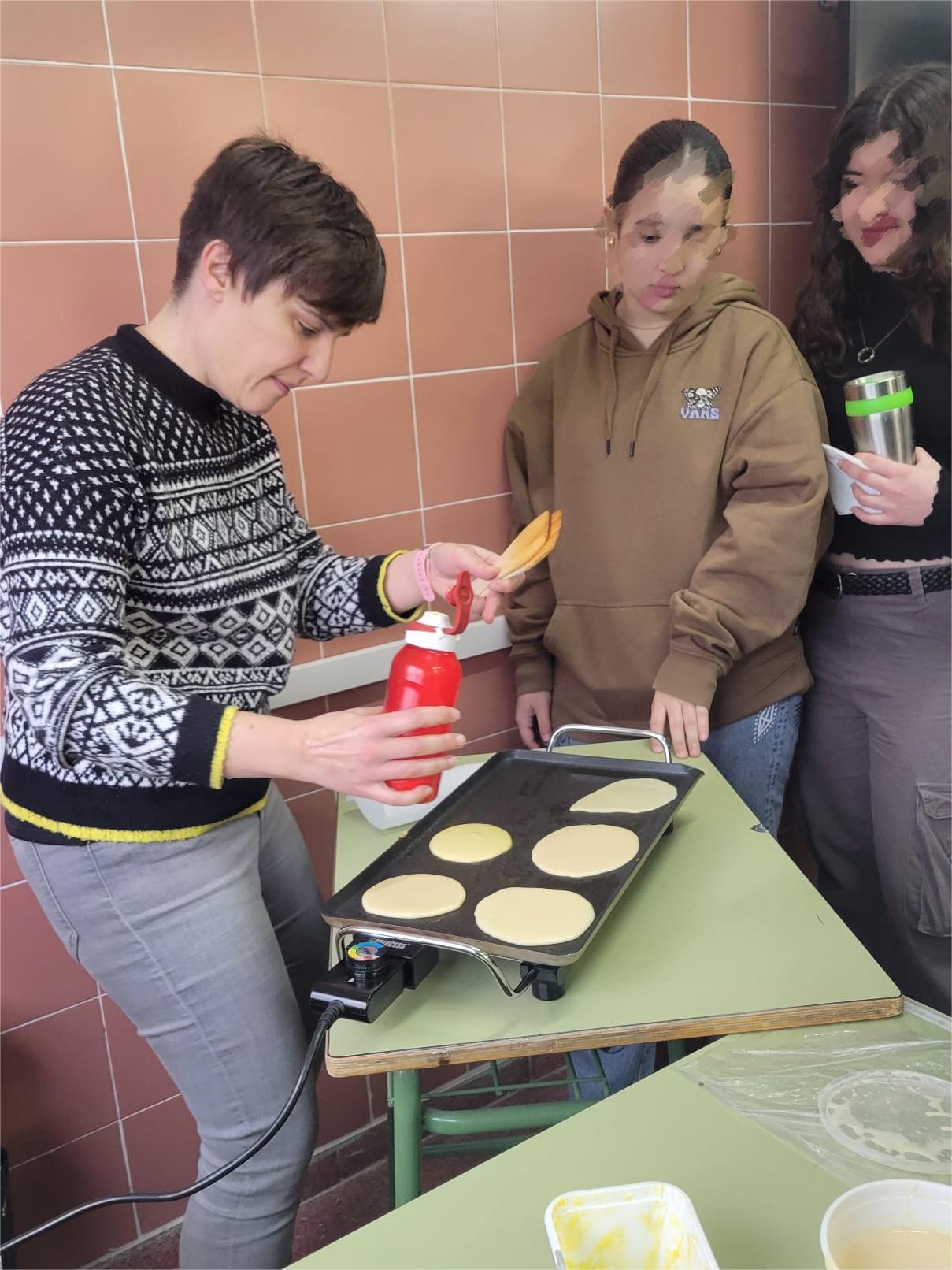
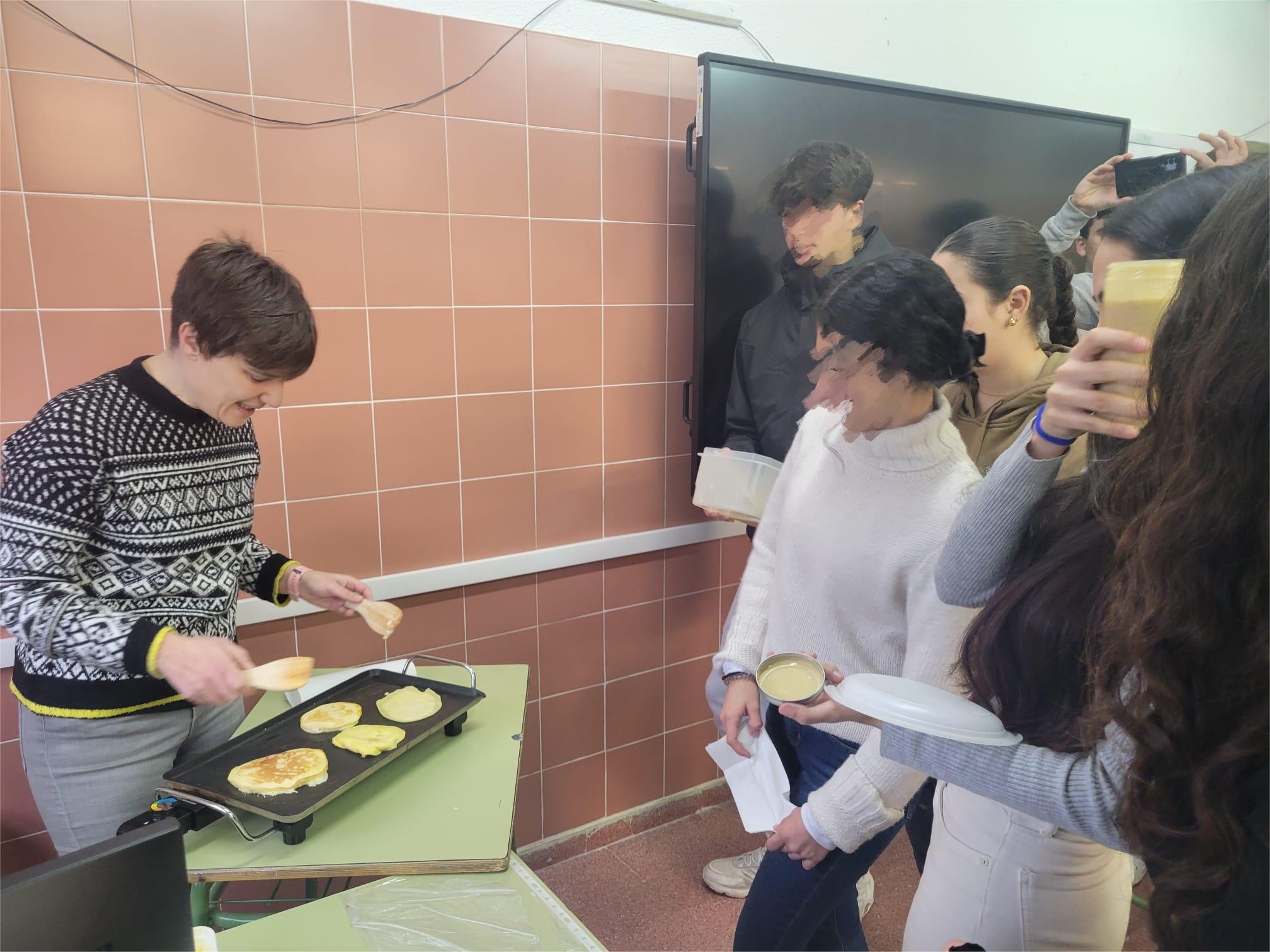
Pancake Day Celebration!
🌟 Pancake Day Celebration! 🥞 🌟
Today, we took a delightful break after the second term by celebrating Pancake Day in class! 🎉 My amazing students brought in all the essential ingredients: flour, eggs, milk, sugar, and vanilla extract. Together, we whipped up some delicious pancakes, and the aroma filled the room!
It was a fantastic opportunity for everyone to bond, share laughs, and enjoy a tasty treat. The smiles on their faces as they flipped pancakes were priceless! 😄
A big thank you to all the students for their contributions and enthusiasm. Here’s to more fun and delicious moments in the classroom! 🍽️❤️
#PancakeDay #ClassroomFun #TeachingWithJoy #DeliciousMemories
4th ESO
BIOLOGY AND GEOLOGY Coordinated with Amaya Rodríguez
How to create your own customized Guess Who board game
Here’s a flavour of the games 4th ESO have worked on…4º ESO
BIOLOGY AND GEOLOGY Coordinated with Amaya Rodríguez
Posters are widely used in the academic community, and most conferences include poster presentations in their program. Research posters summarize information or research concisely and attractively to help publicize it and generate discussion.
The poster is usually a mixture of a brief text combined with tables, graphs, pictures, and other presentation formats. At a conference, the researcher stands by the poster display while other participants can come and view the presentation and interact with the author.
- Important information should be readable from about 10 feet away
- Title is short and draws interest
- Word count of about 300 to 800 words
- Text is clear and to the point
- Use of bullets, numbering, and headlines make it easy to read
- Effective use of graphics, color and fonts
- Consistent and clean layout
- Includes acknowledgments, your name and institutional affiliation
1st ESOBIOLOGY AND GEOLOGY Coordinated with Amaya Rodríguez
Students will create an infographic to share knowledge and data about the kingdoms.
Task
Infographics are an increasingly popular way of sharing information in newspapers, magazines, and online news sites. These visual representations of knowledge and information are designed to make complex ideas and large amounts of data easy to understand. There are many ways to create infographics. After exploring a variety of examples, you will create your own infographic poster that will help others better understand an issue or concept you are studying.
Questions
Which infographic was the best? Why?
- What made them interesting, content or design? Or both?
- How did the use of fonts, color, graphics, and imagery contribute?
- Did the design contribute to how you felt about the information?
Here is a sample of the posters 1st ESO have worked on...
Inclusive Days Project with Paralympic Athlete Sara Granado
As part of our commitment to fostering inclusion and raising awareness about the challenges faced by individuals with disabilities, we recently carried out an inspiring Inclusive Days Project. This initiative aimed to promote empathy, understanding, and solidarity through hands-on experiences and meaningful interactions.
A highlight of this project was the visit of Sara Granado, a distinguished Paralympic athlete, whose presence and testimony deeply enriched our activities. Her story of perseverance and success served as a powerful reminder of the strength of the human spirit and the importance of accessibility and inclusivity in all aspects of life.
Throughout the event, we engaged in a variety of inclusive activities designed to help participants step into the shoes of individuals with disabilities. These experiences allowed us to grasp firsthand the challenges they face daily, fostering a sense of awareness, sensitivity, and respect. By navigating obstacles, participating in adaptive sports, and reflecting on the importance of an inclusive society, we gained invaluable insights that will stay with us beyond this initiative.
The Inclusive Days Project was more than just an event—it was a transformative experience that reinforced the importance of breaking barriers, celebrating diversity, and ensuring that everyone, regardless of ability, has the opportunity to thrive.
We extend our heartfelt gratitude to Sara Granado for her inspiring visit and to all participants who embraced this opportunity to learn, grow, and contribute to a more inclusive world. This is just the beginning of our ongoing journey toward building a society where everyone belongs and is valued.
lunes, 3 de marzo de 2025
OUR JOURNEY AS GLOBAL SCHOLARS IN 2nd ESO - Sección
Exploring Global Perspectives and Sustainable Choices
At our secondary school, and through the 2024-25 GLOBAL SCHOLARS program, students have been engaging in exciting and meaningful projects as part of the CALATA-LIFE initiative. These projects have allowed them to connect with peers worldwide, reflect on their consumption habits, and investigate the sustainability of local systems. Here’s a glimpse into the incredible work they have done:
1. Connecting as Global Scholars
Our students have exchanged perspectives with peers from different cities and countries, including Barcelona, Madrid, New York City, Buffalo, Astana, Paris, and Mumbai. Through discussion posts, they have shared insights about their cultures, daily lives, and global concerns. Additionally, they created engaging videos to introduce their class, school, and city, offering a glimpse into their world and explaining what it means to be a Global Scholar. 📽️
2. Rethinking Consumption for a Sustainable Future
Students have analyzed their daily consumption habits, considering how their environment and culture shape their choices. They explored sustainable alternatives and discovered ways to make more eco-friendly decisions. As part of this project, they created a photojournal showcasing creative ways to apply the 5Rs: Refuse, Reduce, Reuse, Repair, and Recycle.
3. Investigating Local City Systems
Through research and collaboration, students have examined various city systems—such as food, water, clothing, electronics, transportation, waste disposal, and the internet. They identified sustainability challenges and proposed solutions to improve accessibility and environmental impact. Using digital tools, they designed a comprehensive guide to share their findings and recommendations.
Furthermore, they actively participated in discussions and debates with other Global Scholars, gaining new perspectives and refining their ideas. To conclude the project, they delivered oral presentations to share their knowledge with their classmates.
🖼️ 📘 Explore their photojournals and discover their sustainability guides here (2ºF):
These projects have been an inspiring journey of global connection, critical thinking, and sustainability awareness. Our students are not just learning—they are taking action to shape a more responsible and informed future. Stay tuned for more amazing initiatives from CALATA-LIFE!
martes, 18 de febrero de 2025
1º ESO - Ancient Greece
Ancient Greece civilisation - 1º ESO
The students of 1st ESO have made some posters about Ancient Greece. The class has been divided into groups and each group has imagined that they are a team of tour guides who are organizing trips to Greece. They have researched information about different aspects of this culture such as society, economy, sculpture, architecture, mythology or education and have made posters on cardboard to advertise their tours. They have searched for information, worked in teams and improved their oral expression when defending their projects in front of the class.
Medieval cities
The students of 2nd ESO D and E have elaborated by groups models of medieval cities from the High and Late Middle Ages. With this activity they have worked on the parts of the medieval city and the daily life of the different social groups that lived in it. The model has been elaborated during class time and then they have exposed their work to their classmates. The aim was to reinforce their capacity for research, teamwork and oral expression.


.jpg)